U.S. Longevity Laboratories, Inc.
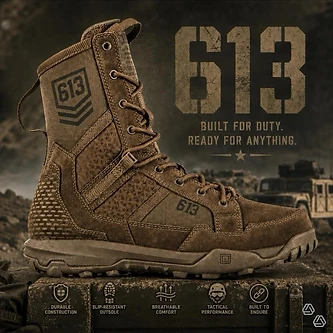
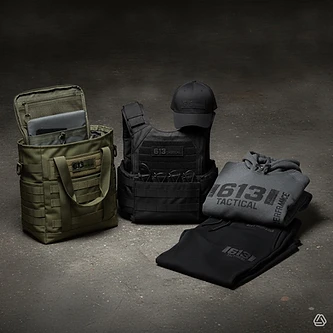
613 Tactical
Contractors · Supplements · Merchandise
Recovery-focused, evidence-informed formulations engineered for those who run toward danger — military, law enforcement, fire, EMS, corrections, and security.


Built for Every Branch of Service.


United States Army
This We'll Defend


United States Navy
Not Self But Country


United States Marine Corps
Semper Fidelis


United States Air Force
Aim High · Fly-Fight-Win


United States Coast Guard
Semper Paratus


United States Space Force
Semper Supra
Click an Operator. See What Stress Costs Them.
Every role burns through a different set of biological reserves. Select a profile to see the measured stress markers, what gets depleted, and the evidence-informed replenishment protocol — drawn from peer-reviewed research.
Combat Soldier
Sustained operations, repeated firefights, chronic sleep restriction under load.
Depleted by Stress
- NAD+
- Magnesium
- B-Vitamins
- Testosterone
- Deep Sleep
Replenishment Protocol
- NMN / NAD+ Precursor
- Magnesium Glycinate
- B-Complex
- Ashwagandha
- Omega-3 EPA/DHA
- Creatine
RESEARCH NOTE
Military survival training produced dramatic alterations in cortisol, free cortisol, testosterone, and thyroid indices. — Morgan et al., Psychoneuroendocrinology.
These statements have not been evaluated by the FDA. Supplement protocols are not intended to diagnose, treat, cure, or prevent any disease. Hormone and peptide protocols are physician-directed only.
Where the Body Breaks.
An interactive anatomical map of the injury regions carried by tactical operators, first responders, and combat athletes. Tap a node to reveal the injury pattern, the recovery science, and the evidence-informed replenishment protocol.

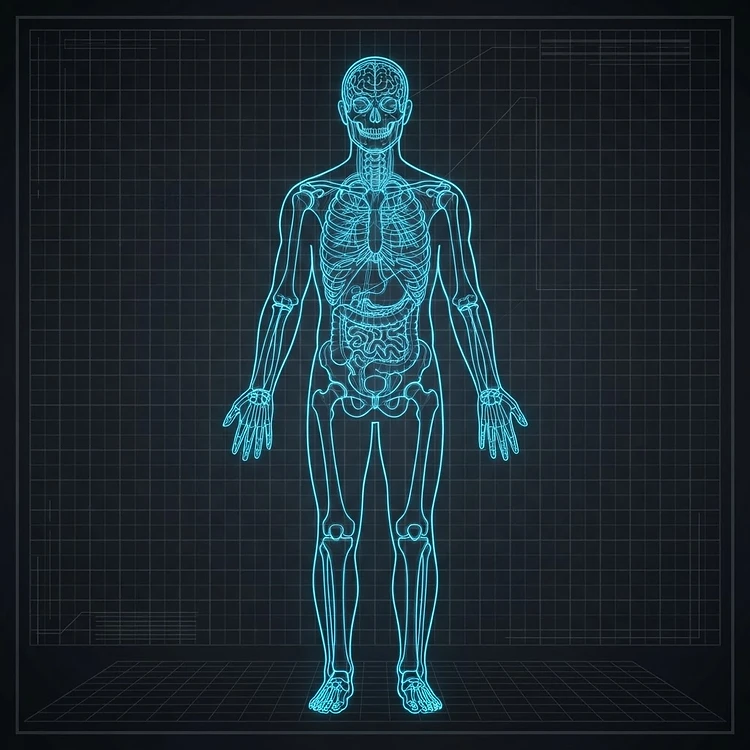
Head & Brain
The head/neck/face is the most commonly injured region in combat sports (38.2% of MMA injuries). Military and first-responder roles add blast exposure and repeated head trauma, driving cumulative TBI risk and neuroinflammation.
Recovery Science
Recovery from TBI centers on dampening neuroinflammation and restoring mitochondrial function. DHA (omega-3) blunts microglial activation; creatine replenishes ATP depleted by impact; magnesium blocks excitotoxic NMDA over-firing; NAD+ precursors (NMN/NR) fuel sirtuin-mediated repair. Graded rest, sleep, and a staged return to activity are essential.
Replenishment Protocol
RESEARCH NOTE
Rainey CE, 'Injuries in Mixed Martial Arts Athletes,' PMC 2953351; head/neck/face 38.2% of reported injuries.
Injury data synthesized from peer-reviewed combat-sport and tactical-population literature. Supplement protocols are not intended to diagnose, treat, cure, or prevent any injury or disease and have not been evaluated by the FDA. Peptide protocols are physician-directed only.
Every Sport Breaks the Body Differently.
Boxing
Head & facial trauma, hand fractures, rotator-cuff wear. ~25 injuries per 100 fight participations.
REPLENISH
Mixed Martial Arts
Head/neck/face 38.2%, lower extremities 30.4%, upper 22.7%. Concussions, joint locks, contusions.
REPLENISH
Kickboxing
Head/neck/face 52.5% of injuries — the highest region share. Lower-extremity and rib trauma.
REPLENISH
Wrestling
Joint trauma, cervical strain, shoulder and knee sprains from explosive grappling and throws.
REPLENISH
Brazilian Jiu-Jitsu
Knee and elbow joint stress, neck chokes, finger/toe trauma. Lower-belt ranks injure at 2× the rate.
REPLENISH
Judo
Shoulder/clavicle and knee injuries from high-velocity throws and breakfalls.
REPLENISH
Muay Thai
Lower-extremity (shin) conditioning stress, rib and liver trauma, concussions from elbows and knees.
REPLENISH
Injury data: Rainey CE, 'Determining the Prevalence and Severity of Injuries in Mixed Martial Arts Athletes,' PMC 2953351; Zazryn et al., professional boxer and kickboxer injury rates, Victoria, Australia.
What the Aging Body Actually Needs.
Targeted, deficiency-based nutrition — not a generic multivitamin. Roughly two-thirds of older adults are malnourished or at risk. These are the nutrients the evidence supports.
Protein (1.0–1.2 g/kg/day)
Sarcopenia — age-related loss of muscle mass and strength — is the most overlooked nutritional risk in older adults. Expert groups recommend 1.0–1.2 g/kg/day for healthy older adults.
MDPI Nutrients, 'Protein, Leucine, Omega-3, and Vitamin D in Sarcopenia,' 2018.
Vitamin B12
B12 deficiency becomes more common with age as stomach acid declines; low B12 causes anemia, fatigue, nerve damage, and cognitive changes. Metformin and PPIs raise risk further.
ScienceDaily / J Pharm Policy Practice, B12 deficiency with age, 2024.
Vitamin D + K2
Limited sun exposure and reduced mobility drive deficiency. Vitamin D supports bone, muscle, and immune function; K2 directs calcium to bone.
Nutritional deficiencies become more common with age — Adv Nutr, 2017.
Calcium & Magnesium
Bone density, muscle contraction, and nerve function. Prefer food sources; supplement when intake is insufficient or osteoporosis is present.
PMC 7353446; magnesium, calcium, and bone health in aging.
Omega-3 (EPA/DHA)
Anti-inflammatory; supports cognitive and cardiovascular health and complements protein/leucine/vitamin D in counteracting sarcopenia.
MDPI Nutrients, sarcopenia prevention and treatment, 2018.
Folate (B9)
Red blood cell formation and DNA production; low folate raises homocysteine, linked to cardiovascular and cognitive decline.
ScienceDaily, supplements older adults need, 2026.
Burning Both Ends? Here's What You're Burning Through.
The high-output, high-social lifestyle — late nights, alcohol, relentless schedules — depletes a measurable set of nutrients and overworks the liver. This is the research-backed recovery protocol for the people who refuse to slow down.
DEPLETED BY THE SOCIAL WARRIOR LIFESTYLE
Heavy alcohol use displaces nutritious calories, impairs fat and fat-soluble-vitamin absorption, and directly depletes B-vitamins, vitamin C, magnesium, and zinc. Up to 84% of patients with alcohol-associated cirrhosis are malnourished — many while overweight.
B-Complex (Thiamine-first)
Replaces the B-vitamins alcohol burns for energy metabolism and neurotransmitter synthesis. Thiamine deficiency is the classic alcohol-related deficit.
Vitamin C
A powerful antioxidant that protects the liver from oxidative stress and fuels glutathione synthesis. 42% of AUD ICU patients are severely deficient.
NAC (N-Acetyl Cysteine)
Direct precursor to glutathione — the body's master detoxifier — supporting liver repair and toxin clearance.
Milk Thistle (Silymarin)
Studied for liver-cell protection and free-radical inhibition in alcohol-associated liver disease.
Magnesium Glycinate
Lower in heavy drinkers; linked to pro-inflammatory response and early liver injury. Supports sleep and nervous-system recovery.
Zinc
Plays a role in liver detoxification and tissue repair; significantly lower in alcohol-dependent individuals.
Omega-3 (EPA/DHA)
Anti-inflammatory; helps reduce liver inflammation associated with alcohol damage.
NMN / NAD+
Alcohol metabolism consumes NAD+; restoring it supports mitochondrial and hepatic recovery.
RESEARCH NOTES
Marik PE et al., 'Vitamin C deficiency is common in alcohol use disorders,' Critical Care, 2019; Pavuluri P et al., 'Zinc and magnesium in alcohol dependence syndrome,' PMC 9135164, 2022; Lieber CS, 'Nutrition, Alcohol Use, and Liver Disease,' PMC 6668875, 2003; AASLD, 'Why Nutrition Is So Important in Alcohol-Associated Liver Disease.'
These statements have not been evaluated by the FDA and are not intended to diagnose, treat, cure, or prevent any disease. This protocol is educational and is not a treatment for alcohol use disorder. If you are struggling with alcohol, contact your physician or SAMHSA's National Helpline at 1-800-662-4357.
The Body at War with Itself.
When a first responder faces an acute traumatic incident — a firefight, a violent domestic call, a mass-casualty scene, a cell extraction — the body launches a massive neuroendocrine response. The hypothalamic-pituitary-adrenal (HPA) axis fires.
The adrenal glands release a surge of cortisol and adrenaline. Norepinephrine floods the sympathetic nervous system, sharpening focus, reaction time, heart rate, and blood flow to skeletal muscle. Blood sugar rises. Pain perception dulls.
This is the fight-or-flight response — protective, fast, and metabolically expensive. It exists to keep you alive in the next ten seconds. It was never designed to run back to back, shift after shift, for a twenty-year career.

Why They Crash After the Rush.
What goes up must come down. After the threat passes, cortisol and adrenaline plummet. The parasympathetic system tries to re-engage, but the body has spent its reserves. This is the adrenaline crash — the exhaustion, the emotional flatness, the shaking, the inability to sleep even when exhausted. And it isn't just a feeling. Repeated activation depletes real, measurable resources.
Magnesium
Consumed by the stress response. Low magnesium worsens sleep quality, muscle recovery, and nervous-system regulation.
B-Vitamins
Burned through energy metabolism and neurotransmitter synthesis. Depletion blunts the body's ability to rebuild after stress.
Vitamin C
The adrenal glands hold one of the highest vitamin C concentrations in the body. Acute stress drops circulating levels.
Amino Acids & Neurotransmitters
Precursors to serotonin and dopamine are disrupted, affecting mood, focus, and recovery.
Sleep Architecture
Cortisol stays elevated after the incident, blunting deep sleep and the overnight hormonal reset.
NAD+
Repeated cortisol surges and sleep loss deplete cellular NAD+, slowing mitochondrial recovery and sirtuin repair.
Over a career of repeated exposures, this compounding, un-replenished depletion is increasingly discussed in occupational-health and first-responder wellness literature as a contributor to burnout, sleep disruption, metabolic dysfunction, and long-term health decline. Most departments issue no standard nutritional or recovery protocol tied to acute stress exposure. 613 Tactical exists to close that gap.
Developed by Scientists. Trusted by Operators.

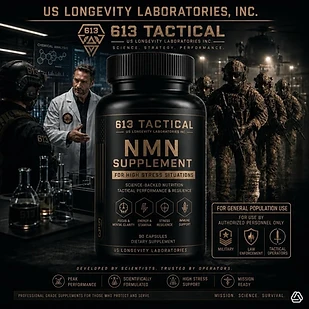
NMN + NAD+ Support
90 Capsules
Nicotinamide mononucleotide — an NAD+ precursor that restores the cellular energy depleted by repeated cortisol surges. Supports mitochondrial recovery and sirtuin activity.
NAD+ levels decline with age and chronic stress; NMN supplementation mitigates age-related physiological decline in mice (Cell Metabolism, 2016).

 PHYSICIAN-DIRECTED
Peptide Support
60 Capsules
Research-grade amino-acid peptide complex (BPC-157 / TB-500 class) for tissue repair, joint recovery, and cellular resilience after high-volume physical stress.
Peptide therapeutics are under active investigation for musculoskeletal recovery and inflammation modulation.

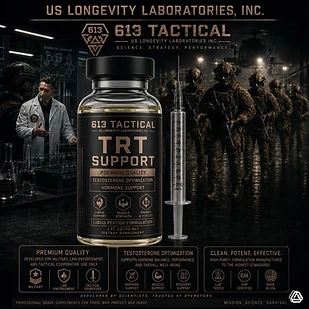 PHYSICIAN-DIRECTED
TRT Support
60 Capsules
Testosterone optimization and hormone balance. Counteracts the testosterone suppression documented in combat and high-stress operational roles.
Combat veterans and survival-training subjects show significantly reduced testosterone; HPA-axis suppression drives the decline.


Tactical Water
16.9 fl oz
Performance hydration and recovery. Electrolytes, magnesium, zinc, B12, D3, and coconut water to rehydrate after the adrenaline crash.
Acute stress raises blood glucose and depletes electrolytes; rehydration with magnesium and electrolytes supports parasympathetic rebound.
FDA Disclaimer
These statements have not been evaluated by the Food and Drug Administration. These products are not intended to diagnose, treat, cure, or prevent any disease. Consult a licensed physician before use, especially if pregnant, nursing, or managing a medical condition.
Physician-Led Protocols
TRT and peptide protocols are available only under the direction of a licensed, independently practicing physician. Nothing is shipped without a diagnosis and clinical oversight behind it.
Every Ingredient, Earned.
No fillers, no marketing fluff. Each compound in the 613 Tactical line is selected from peer-reviewed research for its role in replenishing what acute stress depletes — formulated to the highest confirmed standards for purity and potency.
Magnesium Glycinate
Nervous system, sleep, muscle recovery
B-Complex (B12, B6, Folate)
Energy metabolism, neurotransmitter synthesis
Vitamin C
Adrenal support, antioxidant defense
Ashwagandha
Adaptogen — cortisol modulation, stress resilience
L-Theanine
Calm focus, nervous-system recovery
Zinc
Immune and hormonal support
Omega-3 (EPA/DHA)
Cognitive and inflammatory balance
CoQ10 / Ubiquinol
Mitochondrial energy recovery
Electrolytes (Na, K)
Rehydration and cramp prevention
Taurine
Cellular and cardiovascular support
Built by the Man Who Lives Both Worlds.
613 Tactical was not designed by a marketing team. It was engineered at the bench of US Longevity Laboratories, Inc. — by a researcher who also runs toward the same calls you do. The formulations exist because the man who built them has felt the crash, the sleep loss, and the depletion he set out to fix.

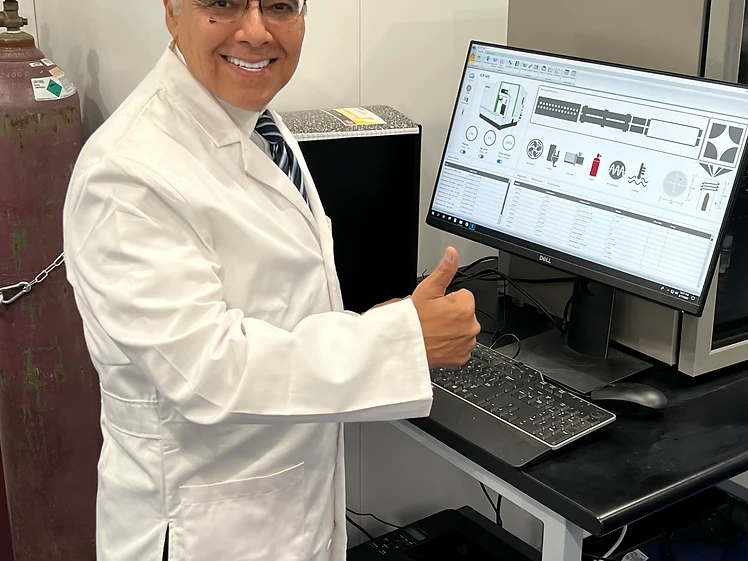
At the Bench
At the analytical bench running LC-MS/MS and mass spectrometry — the same instrumentation that assays purity and potency for every 613 Tactical formulation. The science is not outsourced. It is run by hand, in-house, to the highest confirmed standard.

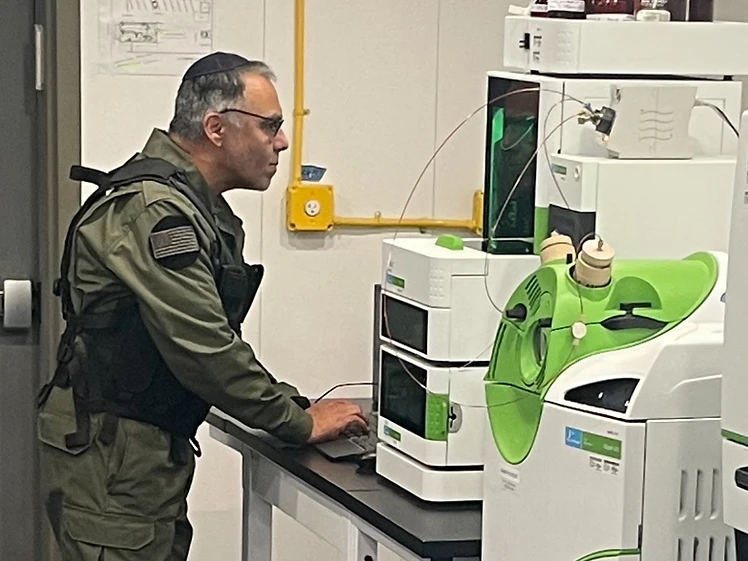
In the Field
The same hands that run the chromatography wear the plate carrier. A dual role — researcher and operator — is the entire premise of 613 Tactical: recovery protocols built by someone who has stood in the adrenaline response and felt the crash that follows it.

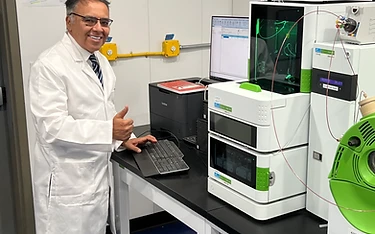


“I built 613 Tactical because the gap between what the science says and what we hand the people who run toward danger is unacceptable. The lab and the field are not separate worlds — they are the same mission.”




DM for a Longer, Stronger Future.
Mission. Science. Survival.
Not a substitute for medical or mental health care. If you are in crisis, contact 988 (Suicide & Crisis Lifeline) or your department's EAP. Supplement statements have not been evaluated by the FDA and are not intended to diagnose, treat, cure, or prevent any disease. TRT and peptide protocols are physician-directed only.